The cold has to move: loading a refrigerator that works
The federal guidance names one temperature and then adds the part everyone skips: the cold air has to circulate. Where a thermometer goes, why bins beat piles, and what no lid changes.
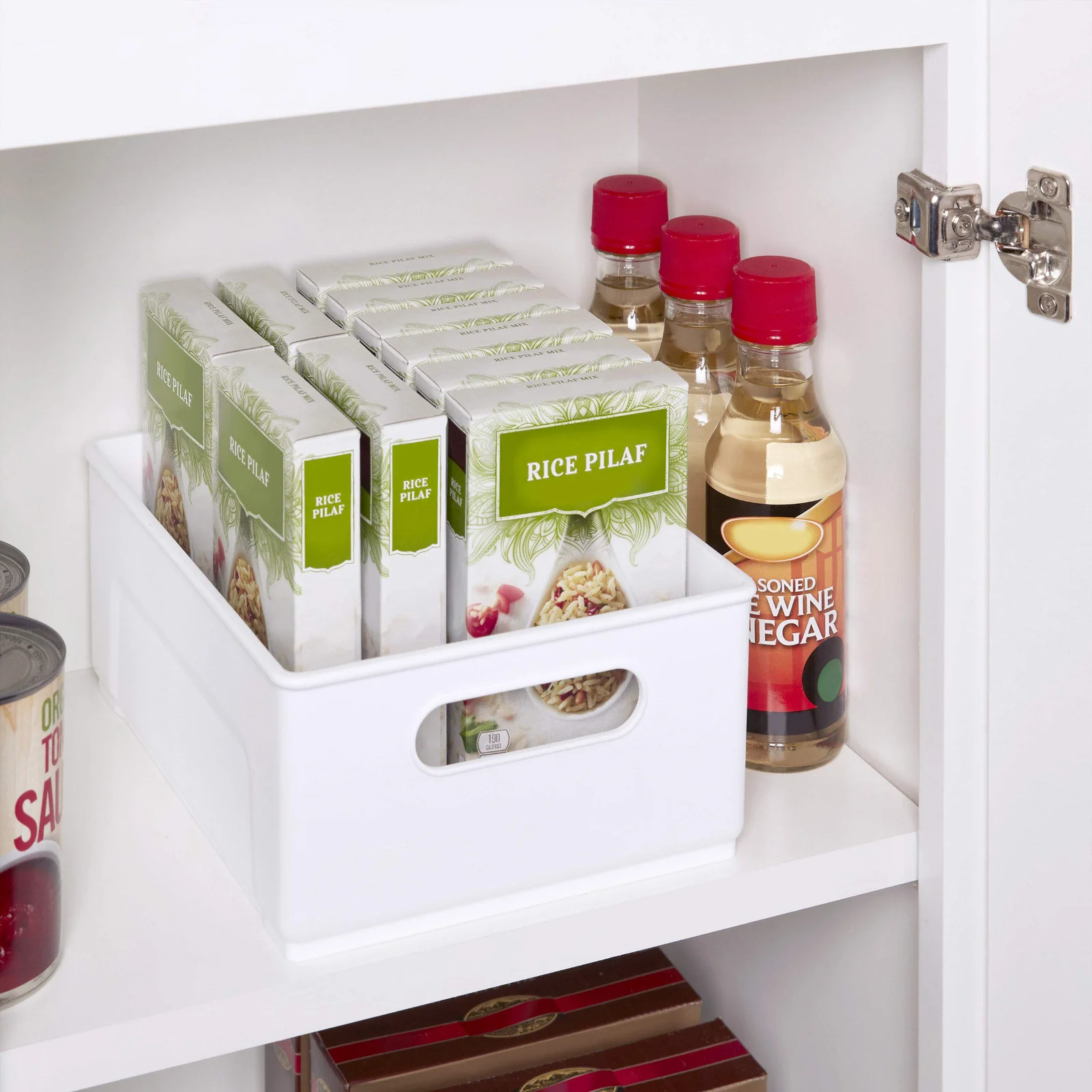
You might think a refrigerator’s only job is to be cold. Not quite: its job is to move cold air. The food inside is chilled not by stillness but by circulation, which is why the federal guidance says, in so many words, that a refrigerator must not be overpacked. A refrigerator that cannot breathe risks letting its least-reached corners drift warm. The guidance draws the line with a single number: 40 degrees Fahrenheit. This is not a casual suggestion. It is the line above which bacteria that cause foodborne illness can multiply with startling speed. Your goal, then, is simple. Arrange the contents to let the cold move while keeping everything you need within reach.
What the guidance actually says
The rules for cold storage are publicly available, concise, and often misunderstood. They come from agencies like the FDA and USDA, and they function as a single, coherent system. A refrigerator should maintain a temperature at or below 40°F. A freezer should be at 0°F. These numbers are not arbitrary. Bacteria grow fastest in the so-called danger zone between 40 and 140 degrees Fahrenheit. At room temperature, their population can double every 20 minutes. This is why perishable food left out for more than two hours should be discarded, a window that narrows to just one hour when the ambient temperature is above 90 degrees. The guidance also asks for refrigerated food stored covered and for spills wiped as they happen, partly because Listeria grows even at refrigerator temperatures. Large portions of hot food are to be divided into shallow containers so they cool quickly, defeating the bacteria’s clock. The federal cold food storage chart on FoodSafety.gov lists specific windows for different foods. For cooked leftovers, that window is three to four days. Freezer times listed there are primarily about quality, not safety, as freezing drastically slows microbial growth. The entire system is built on managing time and temperature. It assumes your refrigerator is capable of maintaining its part of the bargain.
The overpacking trap
A refrigerator crammed full is a common sight. It feels efficient, a testament to a well-stocked household. For food safety, it is a liability. The federal guidance is blunt about the reason: cold air has to circulate around the food, and a wall of tightly packed cartons gives it nowhere to go. The temperature stops being one number and becomes several, and not all of them are the one on the dial. You might find your butter perfectly firm and your yogurt suspiciously warm in the same appliance. The solution is to leave space. Think of it as giving the cold room to do its job. Items should not be pressed against the back wall. There should be gaps between containers, allowing air to flow around them rather than being deflected. This does not mean your refrigerator must be half-empty. It means the packing must be intelligent, with circulation as the priority.
A thermometer on the shelf
Few refrigerator dials, with their vague settings from one to five or min to max, display an actual temperature. They control the compressor, but they do not report the conditions inside the cabinet. The only way to know if your refrigerator is truly at or below 40°F is to use a freestanding appliance thermometer. The agencies recommend an inexpensive one. Place it on a middle shelf, away from the walls and the door. Check it periodically. You are not just verifying a number. You are auditing the refrigerator’s performance under your specific loading conditions, and a reading above 40 means something needs to change: the dial, the seal, or the packing. This small device transforms your relationship with the appliance from one of faith to one of fact. It tells you if your organizational habits are helping or hindering the machine. It is the definitive check on the overpacking trap.
Bins as drawers
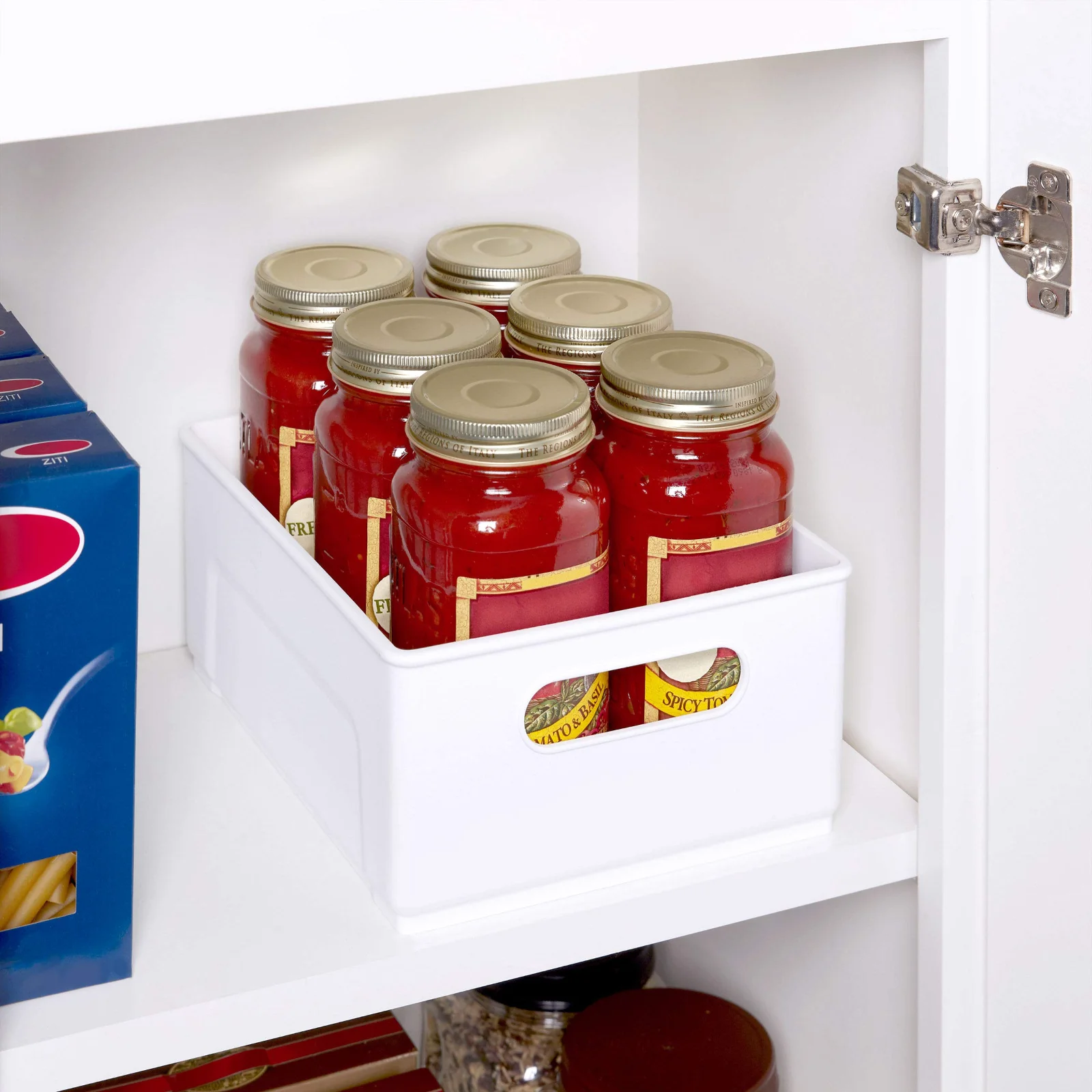
How do you create order without creating blockage? The answer lies in treating shelves as frameworks, not flat surfaces. Clear bins are the tool for this. They function as removable drawers within the fixed space of a shelf. A bin that lifts out leaves the shelf under it wipeable in one pass, addressing the clean-as-you-go directive with minimal effort. They also create vertical channels for air to move between them. Instead of a solid wall of food, the cold air can travel around the bins. Consider the dimensions. A bin that stands proud of the shelf edge will meet the door, so depth is measured before width. Our clear green can bin, for instance, measures 13.7 x 5.6 x 4 inches. A narrow bin with built-in handles can corral jars of condiments, while a mini bin is suited for individual yogurt cups or sauce packets. One customer placed an 18-inch turntable on the top shelf to solve the problem of lost items at the back. The principle is compartmentalization. Group like items together in a container that can be removed as a unit. This prevents the domino effect of searching for one item and displacing ten others. It makes inventory visible at a glance. You open the door and see a bin of cheeses, a bin of condiments, a bin of lunch meats, each contained and accessible. The cold air flows freely around these defined blocks.
The wipe-down argument
The federal guidance’s instruction to wipe spills immediately is pragmatic, not fastidious. Moisture is a catalyst. A spill of chicken juice or milk is a concentrated nutrient source for any microorganisms present. Listeria, a particular concern, is notable for its ability to multiply at refrigerator temperatures. Letting a spill sit is effectively incubating it in a shared space. The argument for bins becomes even stronger here. A spill contained within a single, smooth-walled bin is a simple problem. You remove the bin, wash it in the sink, dry it, and return it. A spill that seeps under a chaotic pile of loosely stored items becomes a major cleaning project. You end up unloading the entire shelf, cleaning the surface, drying it, and reloading everything, all while the refrigerator door is open and its temperature is rising. The bin system localizes the mess. It turns a potential hygiene crisis into a two-minute task.
Time, and what no lid changes
The two-hour rule for perishables left at room temperature is a direct function of bacterial growth rates. That clock starts ticking the moment the food leaves the safe temperature of the refrigerator. This has implications for how you pack your refrigerator after a shopping trip. The goal is to get chilled items back below 40°F as quickly as possible. If you arrive home with a full car of groceries on a hot day, the wisest move is to prioritize the refrigerated items. Do not unload all the pantry goods first while the meat and dairy sweat on the counter. Get the cold things into the cold. Similarly, when storing large quantities of leftovers, the guidance is to divide them into shallow containers. A deep pot of soup cooling in the refrigerator may take hours to drop below 40°F in the center, providing a long window for bacteria to thrive. Shallow containers expose more surface to the cold air, which is the entire trick. Cover what goes in, as the guidance asks, and label it if your memory is honest with itself. What no lid changes is the clock. The three-to-four-day countdown for cooked leftovers begins when the food is cooked, and an airtight seal does not pause it, extend it, or negotiate with it.
The dry side of the pantry
Not every organization problem is a cold problem. The pantry has its own challenges, chiefly accessibility and pest prevention. The same principle of compartmentalization applies. A cabinet canister’s value is in creating a sealed environment for dry goods, protecting them from humidity and insects. Our 4.43-quart cabinet canister is designed for this. For larger, awkward items, a charcoal storage basket offers containment with a more open weave. Even within a pantry, thoughtful placement matters. Heavier items like cans belong on lower shelves, while lighter boxes and fragile packages are safer higher up. A 10-inch white bin with a nonskid liner can keep packets of seasoning or drink mixes from becoming a jumbled mess. The goal is to make every item visible and reachable without a dig-through. This reduces waste, because you stop forgetting the bag of flour lost in the back, and it makes the weekly shop faster to put away. The systems support each other, from the cabinet to the refrigerator shelf, all governed by the same logic: contained, visible, reachable. The cold has to move, and your groceries should, too.
The capacities across the Copco collection are printed in quarts on every card, next to the price and the lid type.
One button, the whole Copco range
Every diameter, capacity and pack count in the Copco basics sits behind this button, with the current price beside it. Measure your shelf, check the figure on the card, and it ships from our retail partner.